%2Ffit-in%2F250x250%2Fguide_websites%2F131881%2Fimages%2F1776482788605logo.png&w=1920&q=100)
Sockeye Salmon Caught on Lake Michigan Charter
Sockeye Salmon & Lake Michigan Trolling - What to Expect
%2F%2Fusers%2F7a333931-d263-4e0e-b181-e7fddd6b6114%2Fimages%2Fsockeye-salmon-catch-lake-michigan-3176.png&w=1920&q=75)
Fishing Charter by Captain Glenn Elertson in June
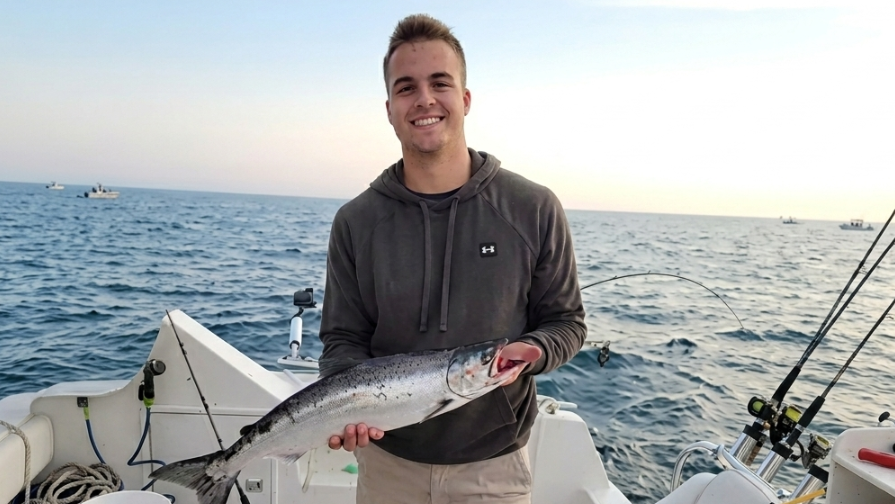
Meet your Captain Glenn Elertson
- Top Port Washington Lake Michigan Fishing Charters


Summary
Join a fishing charter on Lake Michigan with Captain Glenn Elertson of Livin' the Dream Fishing Charters on Tuesday, June 16th. This full-day excursion targets sockeye salmon, king salmon, coho salmon, and trout using professional trolling techniques. Experience the thrill of landing premium fish aboard a fully-equipped 33-foot vessel.
Fishing Charter with Captain Glenn Elertson - Rates & Booking
Captain Glenn Elertson of Livin' the Dream Fishing Charters welcomes anglers aboard on Tuesday, June 16th for an eight-hour Lake Michigan fishing adventure. This full-day charter accommodates up to 6 guests and is designed for all experience levels, from complete beginners to seasoned anglers. The trip departs from the permanent slip at 106 Lake Street in Port Washington, Wisconsin, giving you direct access to some of Lake Michigan's most productive waters.
The charter includes all high-quality rods, reels, and professional tackle needed to target king salmon, coho salmon, sockeye salmon, and various trout species. Captain Glenn uses proven trolling techniques to position your group over fish-holding structure throughout the day. Guests are responsible for obtaining their Wisconsin fishing license and Great Lakes stamp before the trip. The eight-hour booking ensures your group has the 33-foot vessel dedicated exclusively to your party, maximizing your chances for success and comfort. Book your spot today to secure this premium Lake Michigan fishing experience.
Highlights of Secure an Eight Hour Lake Michigan Excursion with Captain Glenn Today
This charter stands out for its combination of professional expertise and beginner-friendly approach. Whether you're targeting the powerful runs of sockeye salmon or the aggressive strikes of king salmon, you'll be fishing with equipment and tactics refined for Lake Michigan's challenging conditions. The stable platform of the Trojan cruiser keeps you comfortable and steady, even when the water gets rough, so you can focus entirely on fishing.
Lake Michigan offers a dynamic fishing environment where the water's moods shift throughout the day. Early morning often brings calmer conditions and active fish, while afternoon sessions test your skills and patience. Captain Glenn reads these changes expertly, adjusting trolling depths, speeds, and locations to keep your lines in productive zones. The thrill of watching a rod bend under the weight of a Lake Michigan salmon is an experience that stays with anglers long after the trip ends.
Local Species Insights: Sockeye Salmon
Sockeye salmon are among Lake Michigan's most prized catches, known for their acrobatic runs and determined fights. These fish navigate to Lake Michigan from the Great Lakes tributaries, and when they're in the system, they create explosive fishing opportunities. Sockeye are distinguished by their darker coloring and deep red flesh, making them both visually striking and excellent table fare. They respond well to trolling presentations, particularly when Captain Glenn positions the boat over the structure and depths where these fish hold during daylight hours.
The sockeye's aggressive nature means hookups often come with immediate, spirited runs that test your rod and line. These salmon don't give up easily, and landing one represents a significant accomplishment. Their presence in Lake Michigan, combined with king and coho salmon populations, creates a diverse and exciting fishing dynamic. The water temperature, seasonal movements, and forage base all influence where sockeye congregate, factors that Captain Glenn considers when planning each day's strategy. When conditions align and the fish are active, sockeye salmon fishing on Lake Michigan delivers the kind of peak-action experience that makes anglers return season after season.
Beyond sockeye, the charter targets coho and king salmon, each species presenting unique challenges and rewards. Coho salmon are known for their aerial displays and surface-feeding behavior, while king salmon test your physical endurance with deep, sustained runs. Trout species round out the fishing portfolio, offering additional opportunities when salmon action slows. This species diversity keeps the fishing interesting throughout your eight-hour day on the water.
Plan Your Lake Michigan Fishing Day
Your eight-hour charter begins at the Port Washington slip, where Captain Glenn briefs your group on the day's plan, safety procedures, and fishing basics if needed. The 33-foot Trojan cruiser comfortably accommodates six anglers, with enough space to fish without crowding and room to move around between hookups. Professional-grade downriggers and outriggers are pre-rigged and ready to deploy once you're on the water, allowing Captain Glenn to present baits and lures at multiple depths simultaneously.
Throughout the day, you'll experience the rhythms of trolling: the hum of the diesel engine, the occasional click of a reel as you work a lure, the sudden excitement when a fish engages your line. The boat's fish finder and GPS keep Captain Glenn positioned over productive water, while the cabin provides shelter if weather develops. Clean restroom facilities and ample gear storage ensure your day remains comfortable. Bring water, snacks, and sunscreen to stay hydrated and protected during your time on the water. By day's end, you'll have experienced the full spectrum of Lake Michigan fishing, from the calm focus of a morning troll to the adrenaline surge of a solid hookup.
Fishing in Lake Michigan: Sockeye Salmon
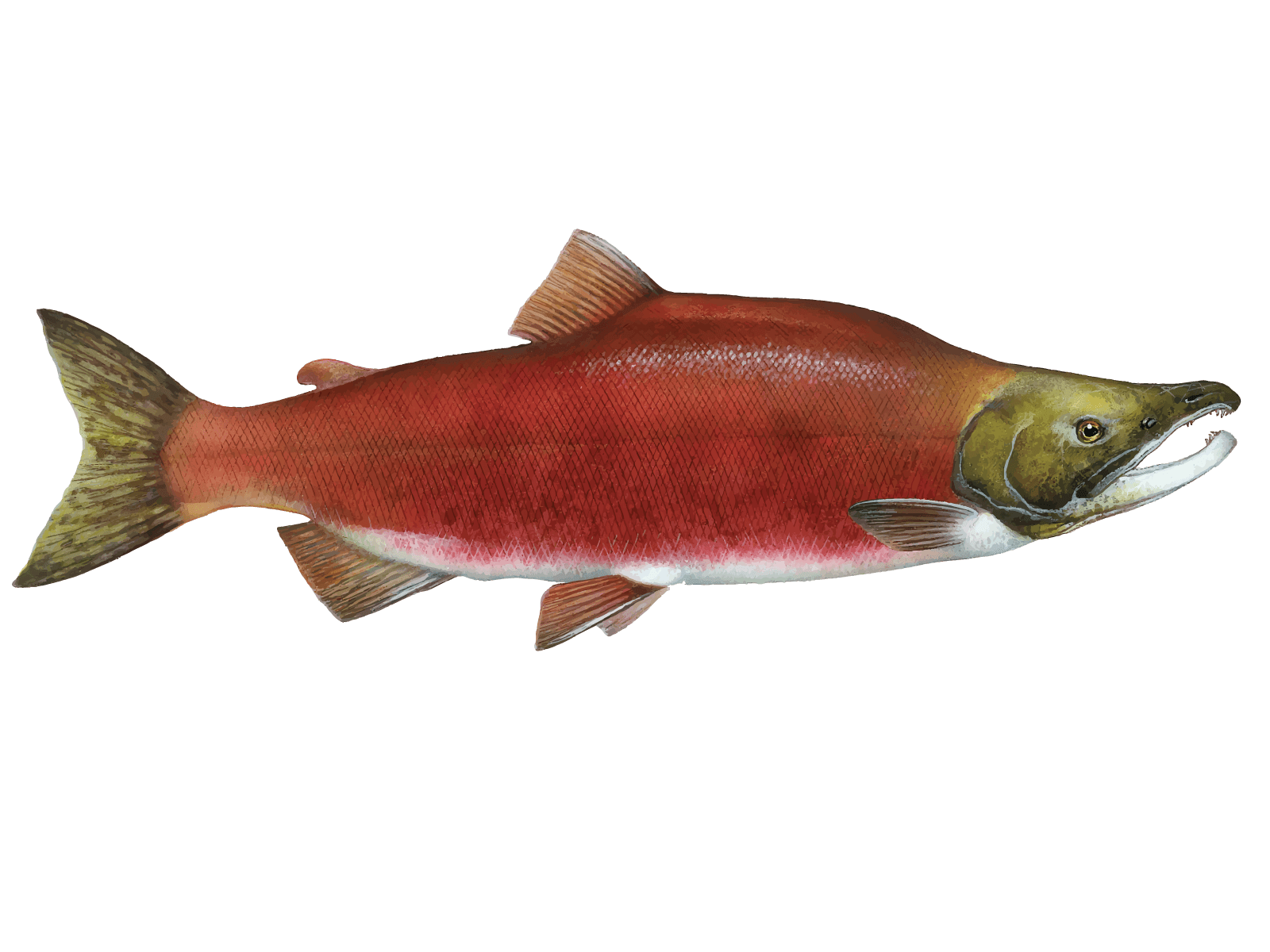
Sockeye Salmon (Oncorhynchus Nerka) is one of the most iconic and sought-after species in the Salmonidae family, belonging to the order Salmoniformes. These remarkable fish are instantly recognizable by their metallic blue-green backs, silver sides, and white bellies during their ocean phase, transforming into a striking red and green during their spawning run—a phenomenon that makes them a visual spectacle for anglers and wildlife enthusiasts alike. Often called red salmon or blueback salmon, Sockeye Salmon are anadromous fish that undertake one of nature's most incredible journeys, traveling from rivers and streams to the vast Pacific Ocean and back again using only their sense of smell to navigate home. From the legendary Bristol Bay in Alaska to the famed rivers of British Columbia, these fish have captivated generations of anglers and remain a cornerstone of Pacific Northwest fishing culture.
Sockeye Salmon Overview
Sockeye Salmon represent a quintessential Pacific Northwest experience, embodying the wild spirit of pristine rivers and rugged coastlines. What makes these salmon so special is their unique life cycle and their powerful spawning drive—they are born in rivers, spend their formative years in lakes, grow to adulthood in the ocean, and then mysteriously return to their natal streams to reproduce. Their dramatic color change during spawning, when they shift from their silvery ocean colors to a deep crimson body and forest-green head, is one of nature's most remarkable transformations. For anglers, visitors, and culinary enthusiasts, Sockeye Salmon represent more than just a fish—they're a connection to wild, untamed waters and sustainable outdoor recreation that has thrived for centuries.
Sockeye Salmon Habitat and Distribution
The native range of Sockeye Salmon spans the entire Northern Pacific Ocean and its tributary systems, making them one of the most geographically distributed salmon species on the continent. These fish are found from the productive waters of Bristol Bay, Alaska, where one of the world's largest salmon fisheries operates, eastward to the Copper River and throughout the river systems of British Columbia. Their range extends southward along the Pacific coast, reaching as far as the Sacramento River in California. One of the most remarkable aspects of Sockeye Salmon is their incredible homing ability and migration distance—these fish can travel inland up to 900 miles from the ocean to reach their spawning grounds, navigating through multiple river systems and overcoming numerous obstacles along the way. They thrive in cool, clear waters and are typically found in inshore marine environments, coastal lakes, and river systems during different life stages. However, habitat degradation and historical overfishing have led to population declines in many regions, making conservation efforts increasingly important for maintaining healthy runs.
Sockeye Salmon Size and Weight
Sockeye Salmon are considered relatively small compared to other Pacific salmon species like Chinook or Coho, but don't let their size fool you—these fish are powerful, spirited fighters on the line. The average Sockeye Salmon ranges from 18 to 32 inches in length and weighs between 4 to 15 pounds, making them an ideal size for fly fishing and spinning tackle. The world record stands at an impressive 15 pounds 3 ounces, a specimen caught on the Kenai River in Alaska by Stan Roach. Most trophy-class fish in productive rivers like those around Bristol Bay and British Columbia tend to hover in the 8 to 12-pound range, which provides excellent sport and a manageable size for handling and processing. Their compact frame relative to their fighting ability makes them a favorite among anglers who enjoy spirited action without requiring heavy-duty saltwater gear.
Sockeye Salmon Diet and Behavior
The diet of Sockeye Salmon changes dramatically throughout their life cycle, reflecting their transition from freshwater to marine environments. Juvenile sockeye in rivers and lakes feed primarily on zooplankton, amphipods, and aquatic insects, growing steadily during their first few years. Once they transition to the ocean, their diet becomes more varied and robust—adult sockeye feed on small fishes, fish larvae, and occasionally squid, taking advantage of the rich marine environment to rapidly add weight and develop the robust physiology needed for their epic spawning migration. In freshwater during spawning season, however, their mouths actually seal shut and they cease feeding entirely, surviving entirely on their stored body reserves. This behavioral shift is remarkable: sockeye become aggressive and territorial during their spawning run, still striking at lures and flies even though they have no nutritional need to feed. This paradoxical aggression is one reason they remain so popular with anglers—they bite not out of hunger but out of territorial instinct and breeding drive.
Sockeye Salmon Spawning and Seasonal Activity
The spawning cycle of Sockeye Salmon is one of nature's most dramatic life events, and it's the driving force behind their entire existence and why they're so important to Pacific Northwest ecosystems and cultures. Sockeye are anadromous, meaning they spend their early lives in freshwater rivers and lakes, migrate to the open ocean to mature and feed, then return to their home streams to spawn. They undertake this incredible journey using olfactory navigation—each fish can identify its home stream by smell and will travel incredible distances and overcome physical obstacles to return to the exact river where it was born. The peak spawning season typically runs from May through September, with peak activity often occurring in summer months. During spawning, both male and female sockeye undergo dramatic physical changes: their bodies turn a brilliant red, their heads turn greenish, their jaws become hooked (called a kype), and they develop humped backs. After spawning, all salmon species die shortly thereafter, returning their nutrients to the freshwater ecosystem in a process that supports bears, eagles, and the forest ecosystem itself—a cycle that has sustained Pacific Northwest wildlife for millennia.
Sockeye Salmon Techniques for Observation or Capture
Fly Fishing Method: Fly fishing for sockeye is one of the most exciting and accessible techniques, making it the preferred method for many anglers in Alaska and British Columbia. A 7 to 9-weight fly rod paired with a 9-foot leader is ideal for casting to these spirited fish. The key to success is matching your fly size to water conditions: during high water, use larger flies (typically #4 to #6), and when water levels drop or warm, switch to smaller patterns (#6 to #8). Water temperature matters significantly—when the water temperature exceeds 60 degrees Fahrenheit, sockeye display a greater willingness to strike dry flies and surface patterns. The crucial technique is positioning your fly at mouth level since sockeye swim close to the bottom and feed with opening and closing mouth motions. In fall, when sockeye are deeper in their spawning migration, very colorful and larger flies tend to be most productive. Around Bristol Bay, Alaska and the productive rivers of British Columbia, guides consistently recommend starting with a #6 wet fly if you're uncertain about conditions, then adjusting based on strikes and water characteristics.
Spinning and Bait-Casting Method: Anglers using conventional tackle should employ spinning rods in the 8 to 20-pound class paired with appropriate reels and lines. Live bait remains highly effective for sockeye: sand shrimp and fresh salmon roe are particularly productive, presenting natural food items that trigger aggressive responses. For lures, small spoons (1⁄2 to 3⁄4 ounce), spinners, streamers, and small artificial flies all produce excellent results. The technique involves casting upstream or across current and allowing your offering to drift naturally through likely holding areas—deep pools, current breaks, and areas below waterfalls are prime sockeye habitat. The spinning method is less demanding technically than fly fishing and remains highly effective, especially during peak spawning runs when fish are concentrated in river channels.
Timing and Location Strategy: The best time for sockeye fishing spans May through September, with peak activity typically occurring in mid-summer when fish are actively moving upriver. During this period, the fish swim upriver and hold near the bottom, making them accessible to both fly and spinning anglers. Research local river conditions and consult with local guides or fishing outfitters to identify current hot spots—runs, pools, and holding areas change seasonally and with water flow. Peak success often occurs during times of moderate water levels and temperatures; extremely high or low water makes fishing challenging. The most productive fishing hours are typically early morning and late evening when light conditions are favorable and fish are most active.
Sockeye Salmon Culinary and Nutritional Notes
Sockeye Salmon is universally recognized as one of the finest eating fish available anywhere, commanding premium prices in markets worldwide and featuring prominently on the finest restaurant menus. The flesh is a distinctive bright red-orange color, deeper and more vivid than other salmon species, and the flavor profile is rich, robust, and distinctly salmon-forward. Compared to other salmon like the larger Chinook, Sockeye is notably oilier with more pronounced flavor and sturdier flesh that holds up beautifully to grilling, smoking, and other robust cooking methods. The combination of that deep red color and rich taste makes sockeye the preferred choice for chefs seeking authentic Pacific salmon preparations. Beyond culinary excellence, wild-caught sockeye salmon is a nutritional powerhouse. The flesh is loaded with omega-3 fatty acids, which are essential for cardiovascular health and help reduce inflammation throughout the body. A serving of sockeye provides substantial amounts of vitamins B12 and D—nutrients critical for optimal brain function, cognitive health, and immune system performance. The fish is also rich in potassium, which supports healthy muscle function and cardiovascular health, and selenium, an important mineral that strengthens the body's antioxidant defense system. The wild-caught variety, in particular, offers superior nutritional density compared to farmed alternatives, making it an exceptional choice for health-conscious diners seeking both flavor and genuine nutritional benefit.
Sockeye Salmon Frequently Asked Questions
Q: What is the best bait or lure for catching Sockeye Salmon?
A: For fly fishing, a #6 wet fly is an excellent starting point—adjust size based on water level and conditions. For spinning, sand shrimp and fresh salmon roe are highly productive live baits, while small spoons (1⁄2 to 3⁄4 ounce), spinners, and streamers work exceptionally well. The key is matching your offering to water temperature and clarity: higher water temperatures (above 60°F) warrant smaller, more delicate presentations, while colder water calls for larger, more visible offerings.
Q: What is the best time of year to fish for Sockeye Salmon?
A: Peak sockeye fishing occurs May through September, with the most productive periods typically in mid-summer when fish are actively moving upriver during spawning runs. Early morning and late evening hours often provide the most aggressive bite and best fishing conditions.
Q: Where can I find Sockeye Salmon near major fishing destinations?
A: Bristol Bay in Alaska and the rivers of British Columbia are world-renowned for exceptional sockeye fishing. The Kenai River in Alaska and the Fraser River system in British Columbia consistently produce excellent runs. Around Alaska, the Copper River system and numerous Bristol Bay tributaries offer outstanding opportunities. Research current run timing and water conditions before your trip, as sockeye distribution changes significantly throughout the season.
Q: Is Sockeye Salmon good to eat, and how does it compare to other salmon?
A: Absolutely—sockeye is considered one of the finest eating salmon available. The flesh is distinctively red-orange, oilier than many other salmon species, with a robust, rich flavor that stands up beautifully to bold preparations like grilling or smoking. Compared to Chinook or Coho salmon, sockeye offers more pronounced salmon flavor and sturdier texture. Wild-caught sockeye is particularly prized for its superior flavor and exceptional nutritional profile, including abundant omega-3 fatty acids, vitamins B12 and D, and essential minerals.
Q: What equipment do I need to fly fish for Sockeye Salmon?
A: A 7 to 9-weight fly rod paired with a matching reel, 9-foot leader, and appropriate fly line is the standard setup. You'll want a variety of flies in sizes #4 through #8—bring both larger patterns for high water and smaller ones for low water conditions. A quality landing net and practice casting are essential, as these are spirited fish that require proper technique and equipment to land successfully.
Q: Are Sockeye Salmon native, and are their populations healthy?
A: Sockeye Salmon are native to the Northern Pacific Ocean and its tributaries, ranging from Alaska southward to California. However, populations have experienced significant decline due to habitat degradation, dam construction, and historical overfishing. Many river systems now have strict regulations to protect remaining runs. Always check current regulations in your area and practice catch-and-release or respect slot limits to help protect this remarkable species for future generations.
More species you can explore on this trip
Livin the Dream Fishing Charters Available Trips
Other customer memories from this trip
The 33-foot Trojan cruiser serves as your floating platform for the entire eight-hour Lake Michigan experience. This vessel is built for stability in big water, giving you the confidence to focus on fishing rather than worrying about the boat's movement. The deck layout provides genuine working space where six anglers can fish comfortably without constantly bumping elbows or competing for prime positions. Professional-grade downriggers and outriggers are already set up and ready to deploy, so Captain Glenn can immediately get lines in the water at productive depths. The cabin keeps you dry and protected when the weather turns rough, while the reliable diesel engine delivers dependable performance for getting to the fish and returning safely. Below deck, you'll find clean restroom facilities and ample storage space for coolers, personal gear, and equipment. The fish finder and GPS are part of the working infrastructure, constantly feeding information to Captain Glenn about water depth, structure, and fish location. All the premium rods, reels, and tackle are maintained on board and dialed in specifically for Lake Michigan conditions, so your focus stays on the fishing rather than gear logistics.